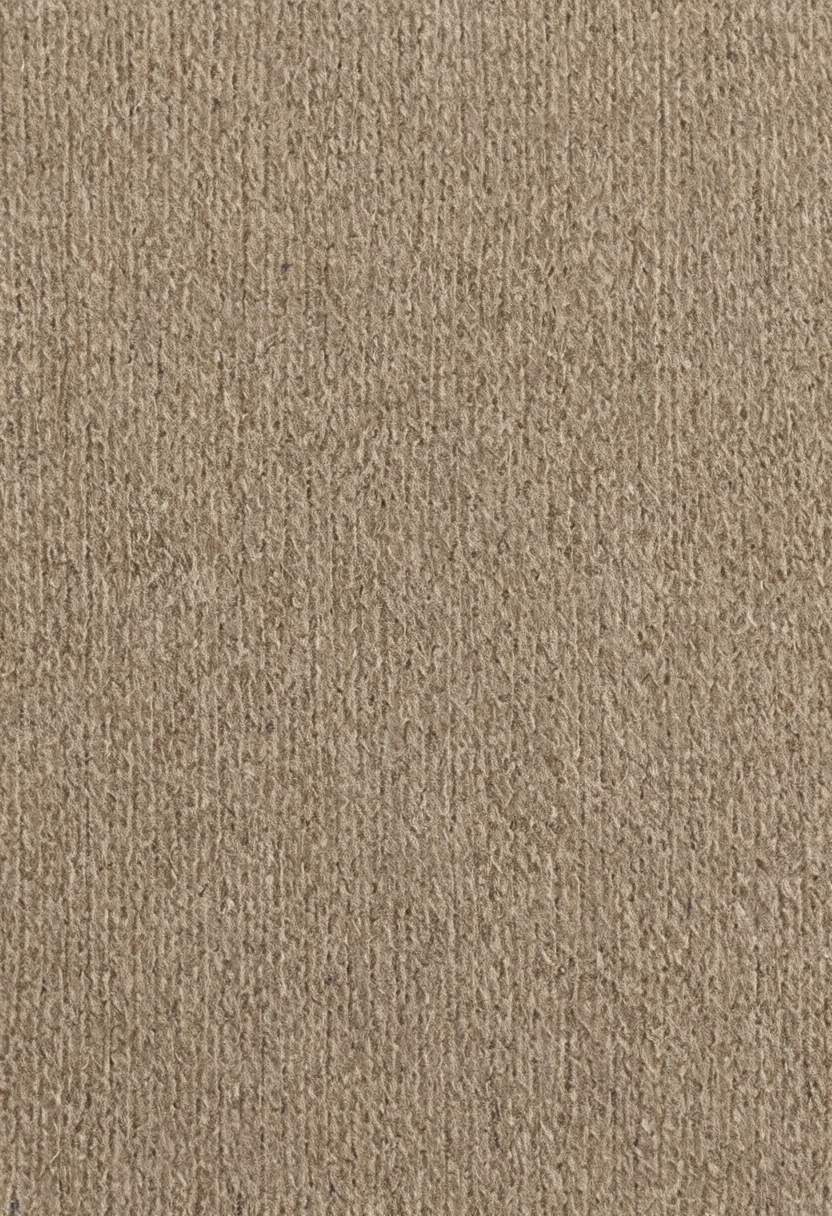
A textile sample is a small piece of a specific product, not a complete promise about a finished room. Sarelli Textiles is an Italian manufacturer of furnishing fabrics and custom carpets. A designer reading samples for a Dubai interior should connect the physical swatch to its reference, construction, direction, test data, and the actual light where it will be used.
Sample cards can make unlike materials seem equally easy to compare. A velvet may be cut against its pile, a sheer may be folded into four layers, and a rug tuft may show color but not backing. Open the sample, identify its face and reverse, and ask what the card does not show. The goal is to avoid ordering a complete textile assembly from a fragment of incomplete evidence.
Which information should a sample carry?
A sample should be traceable to a style, color, supplier, composition, construction, finish, and production or lot information where available. It should also show the intended application and the relevant technical data. The Association for Contract Textiles’ glossary defines a cutting for approval as a small piece requested before ordering to check color, pattern, and construction. A cutting for approval should be compared with the original master sample, not treated as a replacement for the entire specification.
Check the back of the card and any digital technical sheet. Look for usable width, repeat, direction, care, and test method. A word such as “performance” without the relevant method and result is not enough to make a product suitable for a public seat or sunny window. If a field is blank, ask the supplier rather than assuming it passes.
In U.S. commerce, the Federal Trade Commission’s textile guidance discusses labeling for samples used to promote covered products, subject to specified exceptions. That legal scope should not be transferred automatically to a UAE transaction. The practical lesson for an international design team is to keep a clear composition declaration and confirm the local documentation separately.
How do face, reverse, and edge reveal construction?
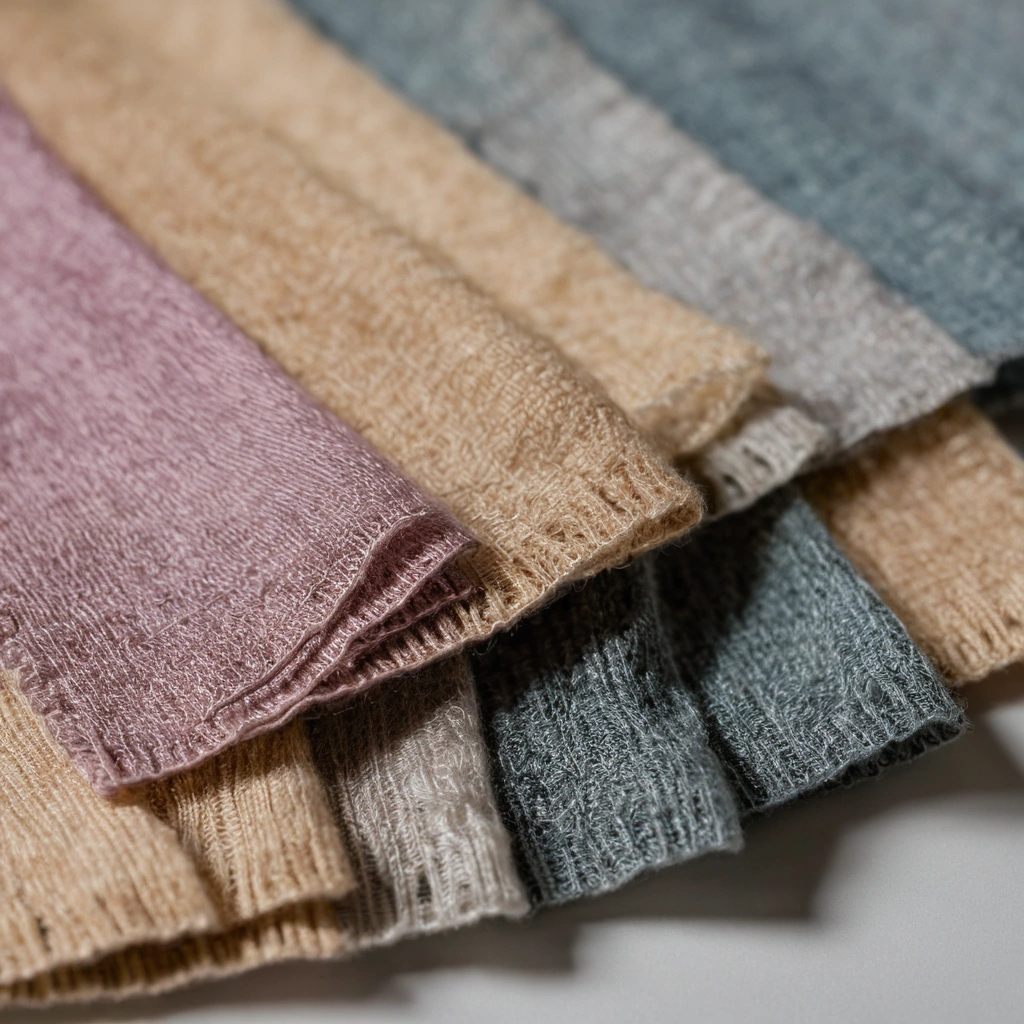
The face shows the surface the room will see; the reverse reveals how yarns, backing, or coating support it. A jacquard may display a different version of its pattern on the back. A velvet’s reverse does not show the light behavior of the pile, but it can reveal the ground and any backing. A rug sample’s edge can show pile thickness and finish, while a small tuft may hide both.
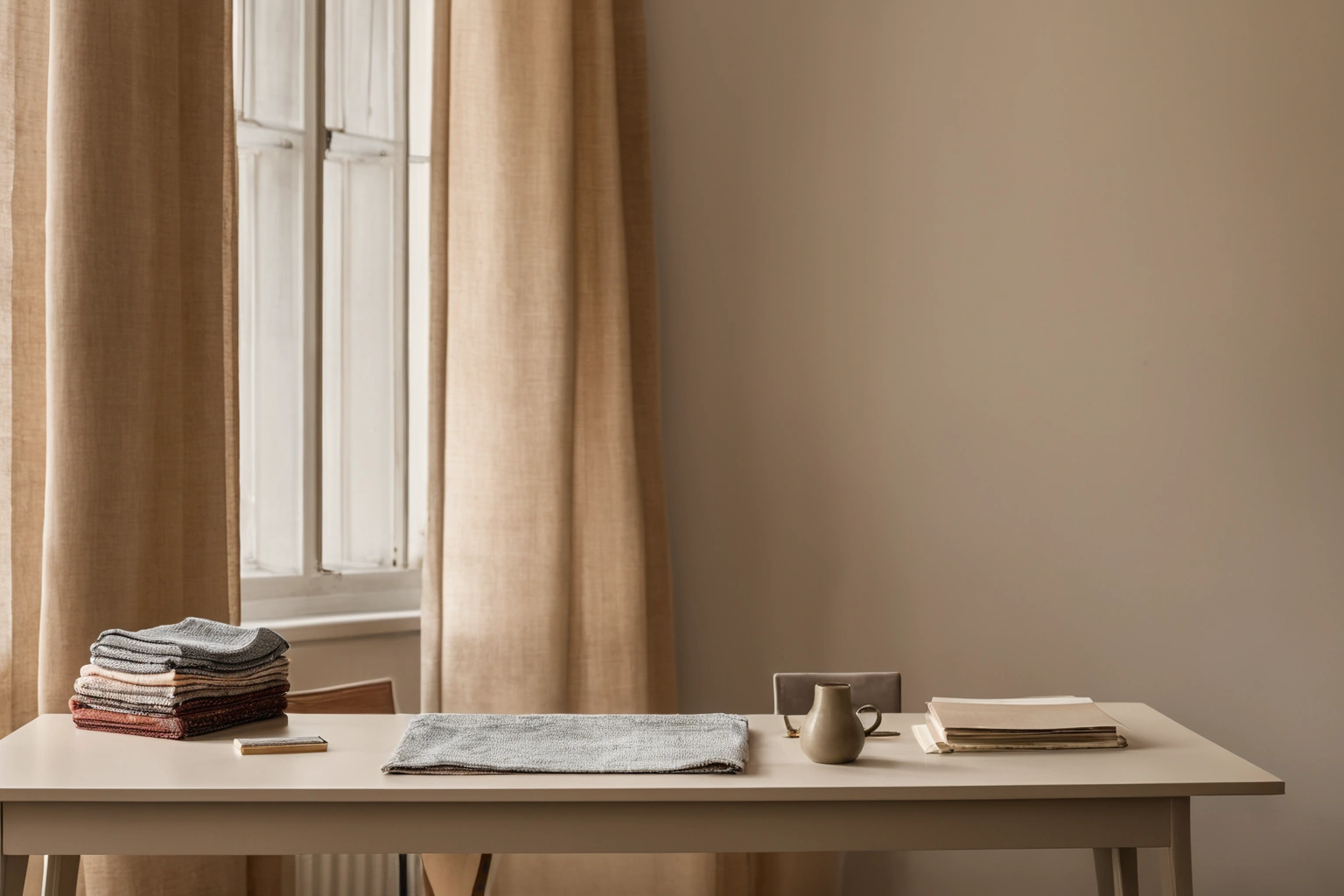
Handle the sample in its intended orientation. Bend upholstery fabric around a cushion-like form and inspect whether the weave opens at the curve. Hold curtain cloth vertically in folds against a window. Put a rug sample on the actual floor. A sample laid flat on a desk can hide transparency, drape, and directional shade.
The Association for Contract Textiles’ quality guidelines distinguish usable width, pattern direction, and pile direction. Those details matter before cutting. A sample card might be turned for display; the workroom must know how the material comes off the roll and which direction was approved.
| Question | Physical sample | Additional evidence |
|---|---|---|
| Color and texture | View in project light | Production cutting or lot check |
| Pattern repeat | Only if large enough | Repeat dimensions and drawing |
| Abrasion or lightfastness | Cannot prove by touch | Method and test report |
| Cleaning | Cannot prove by appearance | Product-specific care instructions |
| Finished fit | Suggests drape or pile | Full-size mock-up and site dimensions |
What does a test icon on the card mean?
A test icon points to a defined property under defined conditions. The Association for Contract Textiles’ voluntary performance system separates flammability, crocking, lightfastness, physical properties, and abrasion, with application and construction distinctions. One icon does not stand for all performance. Ask which edition and test method were used for the exact product.
For a sofa, an abrasion result does not answer whether a seam slips or a color fades. For a curtain, a lightfastness result does not answer whether the fabric provides privacy when backlit. For a rug, a color tuft does not show whether the backing is appropriate for the floor. The sample and the report should be read together against the project brief.
ACT’s disclaimer says its marks are information aids, not guarantees of compliance with every law or code. In Dubai, a public or hospitality project may need local review by the responsible consultant. A sample card cannot resolve that obligation on its own.
How should color be checked in the real room?
View the sample at the position where it will be installed, under both daylight and the room’s normal evening lamps. The U.S. Department of Energy’s LED guidance distinguishes a lamp’s apparent color from its ability to render object colors. Two samples that seem close in daylight can diverge at night. A Dubai window can also backlight a sheer strongly during the day, altering both color and transparency.
Keep the surrounding materials visible. A curtain sample beside the wall and sofa tells more than a swatch held against a white card. A rug sample should sit on the actual floor. Rotate directional fabrics to expose pile or sheen changes. Photograph the comparison for discussion, but keep the physical samples as the approval reference because screens alter color.
Ask for a cutting from the production lot before a large order is cut. Compare it with the approved master under the same light. A close but visible difference may be acceptable, but the client should make that decision knowingly. Write the lot and date on the approval record.
What should the order reference after sample approval?
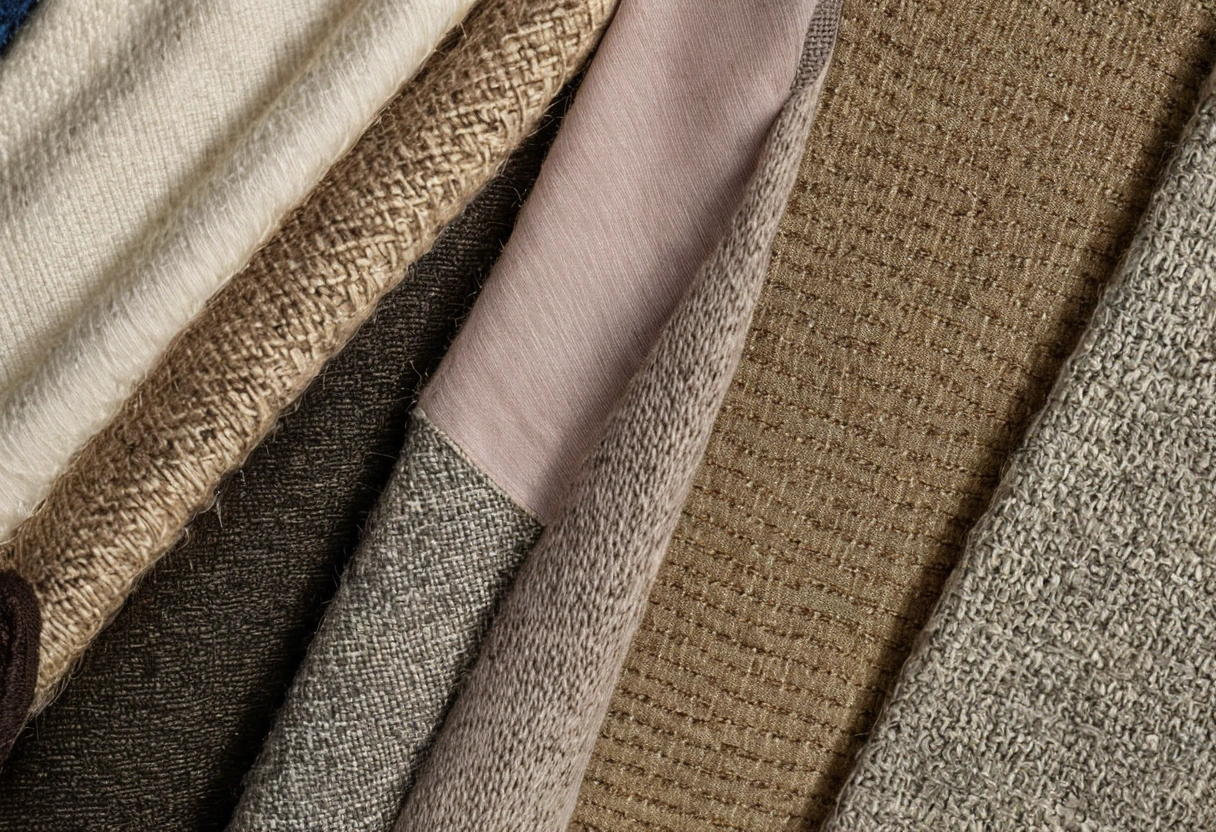
The order should reference the exact style, color, composition, finish, width, repeat, direction, lot or approved cutting, quantity, intended use, and care information. For curtains, include lining and finished dimensions. For upholstery, include the furniture item and cutting plan. For rugs, include the finished size, pile, edge, backing, and pad relationship.
- Inspect face, reverse, edge, and direction.
- Check the sample at the intended scale and room position.
- Request test methods and care instructions separately.
- Compare a production cutting with the master sample.
- Keep the approved sample with the order and installation drawing.
A sample is a decision tool when its limits are understood. It can reveal appearance, handle, and construction clues, while documents establish performance and a full-size mock-up establishes fit. Reading all three together makes the final order more precise than a favorite swatch alone.
Sample libraries can drift over time. A card may remain in a designer’s drawer after the supplier has changed the finish, discontinued a color, or moved production to a new lot. Before a decision becomes an order, confirm that the stated reference is current and request an up-to-date cutting. The old card still records the original design intent, but the new cutting is the material that will actually be fabricated.
For a patterned textile, inspect more than one repeat if possible. A small cut can show an attractive corner while hiding a large contrasting element elsewhere in the design. For a plain textile, inspect a broad area for shade variation or surface marks. A card stapled tightly to paper may distort the drape; release a larger sample before judging how a curtain or loose cover will hang.
Some questions need a maker’s demonstration. If a fabric is proposed for a curved chair arm, ask the upholsterer to drape it over the actual shape. If a trim is proposed for a curtain corner, ask the workroom to make that corner. A mock-up can show whether a material that looks compatible on a board can be fabricated cleanly. The result should be attached to the approval record, not lost as an informal showroom conversation.