A villa owner comparing three marble quotations is usually weighing three different promises. One price covers blocks that still have to be sawn and finished. Another covers slabs from a named production run. A third covers material already sitting in a yard, ready to load. This article is written for the buyer who has to choose between them before signing: it sets out what each quotation should name, which published standards can actually be checked, and how to build a decision around a fixed handover date. See also: classic Italian villa interior design.
Contents
- Which marble sourcing route is defensible for a Dubai villa: Italian blocks, regional slabs or stocked stone?
- What must a marble supplier's quotation name before a UAE villa buyer can compare it?
- Do ASTM C503 and EN standards actually protect a villa marble purchase?
- How do batch consistency and dry-lay approval work across the three marble routes?
- How much time do freight and UAE customs add to each marble route?
- Which route should a villa buyer approve under a fixed handover deadline?
Key takeaways
- All three routes can be defensible.
- Insist on a quotation that lets you compare like with like.
- Partly, and only if you use them correctly.
- The control you want is the same in all three cases: see the real material, laid out, before it is fixed.
- This heading asks for a number, and the honest answer is that no approved source in this article provides one.
The approved evidence behind this article comes from ASTM International, the Natural Stone Institute and the U.S. Environmental Protection Agency. Those sources cover specification designations, test methods, care behaviour and indoor-air guidance. They do not publish quarry yields, freight durations, customs clearance times or prices for any sourcing route. Where this article goes beyond those records, it gives you questions to put to a supplier and documents to request, not claims about what the market normally does.
Which marble sourcing route is defensible for a Dubai villa: Italian blocks, regional slabs or stocked stone?
All three routes can be defensible. What makes one defensible is not its country of origin but whether the supplier can tie the price to an identified lot, a stated scope of work and a delivery commitment you can hold them to. Treat “Italian”, “regional” and “stocked” as descriptions of where material sits today, not as quality grades.
Ask each supplier to place their offer on the same three axes:
- Material identity. Which quarry or production batch, which lot numbers, and can you see the actual material before it is committed to your project?
- Remaining work. Blocks require sawing, finishing and cutting to your drawings; slabs require layout and cutting; stocked stone may already be cut. Ask exactly which steps are inside the quoted price and which are variations.
- Reversibility. If the delivered lot does not match the approved sample, what is the remedy, who pays, and how long does replacement take?
A route becomes indefensible when the supplier cannot answer those questions in writing. Origin alone will not rescue a vague quotation, and a modest origin will not condemn a fully documented one.

Do ASTM C503 and EN standards actually protect a villa marble purchase.
If the villa is being designed in a classic Italian idiom, let the interior scheme lead the stone selection rather than the other way round. Our guide to classic Italian villa interior design sets out how finishes, joinery and stone read together in that language, useful context before you fix a marble palette.
What must a marble supplier's quotation name before a UAE villa buyer can compare it?
Insist on a quotation that lets you compare like with like. Request these items as line entries, not as a single lump sum:
- Stone name, quarry or producer, and the lot or batch identifiers for the material offered.
- Format offered: block, slab or cut-to-size, with nominal thickness and finish for each area.
- Quantity basis: net area, gross area, and the wastage allowance assumed, so you can see what you are paying for.
- Scope boundary: sawing, resin treatment, polishing, edge profiles, cut-outs, dry-lay, packing, delivery, offloading, installation, sealing.
- Test documentation offered, naming the standard designation and edition and the lot tested.
- Sample and approval procedure, including who signs off the dry-lay and what happens if you reject it.
- Programme: dates for sample availability, approval, production, shipping, delivery and installation, with the assumptions behind each.
- Payment stages linked to those milestones, and the remedy for late or non-conforming delivery.
Where a supplier offers a test report, check that the method is named precisely. ASTM International publishes ASTM C97/C97M as the laboratory test methods for absorption and bulk specific gravity of dimension stone. According to ASTM’s own conditions for that reference, a project report should state the tested lot and the method edition, so ask for both, and ask whether the tested lot is the lot being sold to you.
Comparison also depends on how the rest of the contract is structured. If you are still deciding who carries responsibility for design versus execution, read our comparison of design-and-build versus separate design and fit-out contracts for a Dubai villa before you allocate stone supply risk.
Do ASTM C503 and EN standards actually protect a villa marble purchase?
Partly, and only if you use them correctly. A standard designation on a quotation is not a warranty. It tells you which yardstick was applied; protection comes from the report, the lot it covers and the contractual clause that references it.
What the approved records establish:
- ASTM C503/C503M is, per ASTM International, the specification covering marble dimension stone, setting minimum physical requirements for that material class. ASTM lists water absorption, density, compressive strength and flexural strength among the properties covered. ASTM’s conditions for this record state that exact edition suffixes and threshold values must be read from the purchased current standard text, so this article quotes no numeric limits, and you should ask the supplier which edition they are certifying against and request the values from that text.
- ASTM C97/C97M is the test-method reference described above. A method tells you how a number was produced; it does not tell you whether the number is acceptable for your application.
- ASTM C1028 deserves specific attention because it still appears in older paperwork. ASTM International records that this static coefficient of friction pull-meter method, historically cited for stone floors, was withdrawn without replacement. If a supplier’s slip-resistance claim rests on C1028, ask what current basis they can offer instead, and treat the legacy figure as historical rather than as a live guarantee.
No EN standard claim is included here, because no EN record was approved for this article. If a quotation cites an EN designation, ask the supplier to provide the standard’s full title, edition and the corresponding test report, and verify it independently rather than accepting the abbreviation.
Practical step: write the specification into the contract as “material conforming to [designation and edition], evidenced by a report on the delivered lot”, with rejection rights if the report or the lot does not match. That clause, not the logo, is what protects you.
How do batch consistency and dry-lay approval work across the three marble routes?
The control you want is the same in all three cases: see the real material, laid out, before it is fixed. What changes is how much material exists to look at and how easily a rejected lot can be replaced.
- Blocks. Ask which block or blocks your slabs will come from, and request that slabs for connected areas be produced from the same block where the supplier can commit to it. Ask what happens if yield from that block falls short of your quantity.
- Slabs from a production run. Request the bundle or batch numbers, photographs of the actual bundles, and confirmation that reserve material for future repairs comes from the same run.
- Stocked stone. Ask to inspect the specific crates or bundles reserved for you, and ask that they be tagged and held against your order so the inspected material is the delivered material.
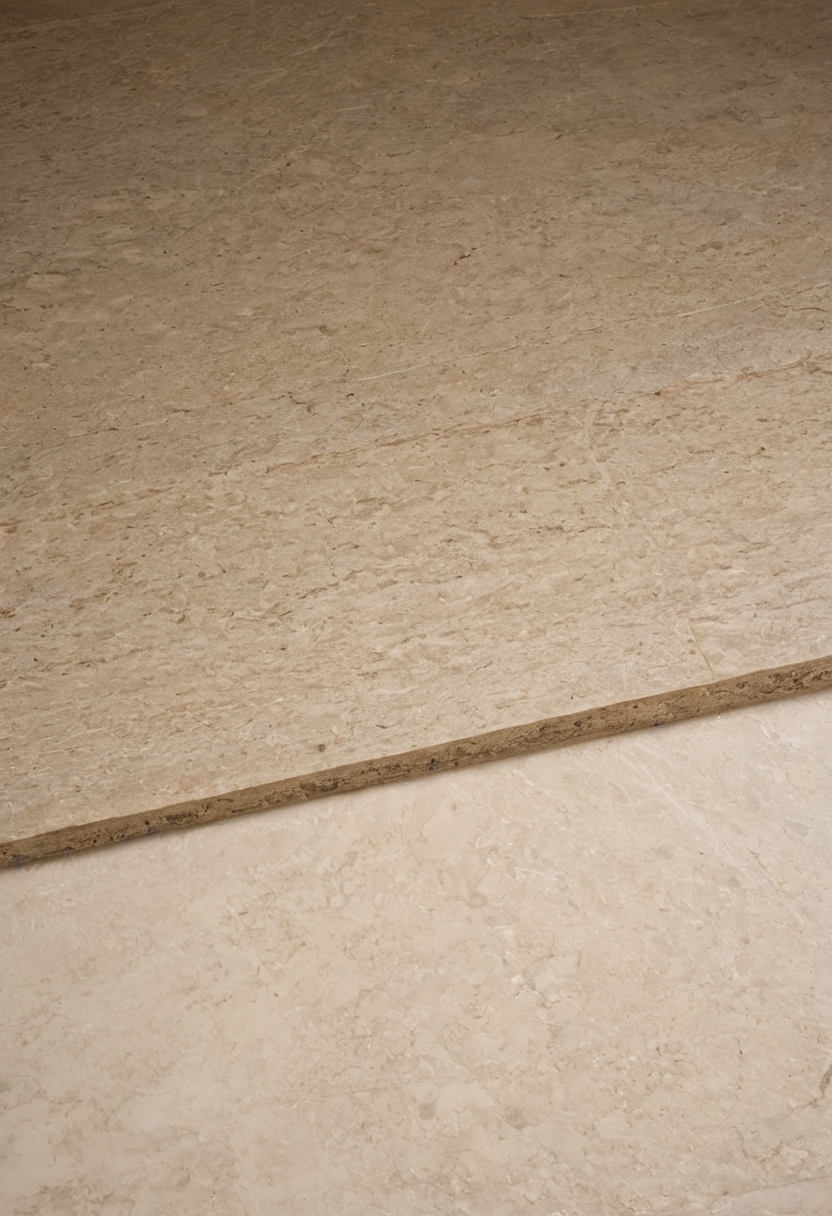
For every route, specify a dry-lay: the cut pieces arranged in sequence in the supplier’s yard or on site, numbered, photographed from above, and signed off by you or your designer before installation. Write down the acceptance criteria in advance: acceptable range of veining and tone, how pieces are numbered, how transitions between areas are handled, and what constitutes grounds for rejection. Ask who bears the cost of re-cutting after a rejected dry-lay.
Judge the stone alongside the other finishes rather than in isolation. The same discipline we describe in our note on how to read textile samples applies to slab bundles: view the actual material in the light and at the scale it will be used, not a small polished chip.
How do batch consistency and dry-lay approval work across the three marble routes.
How much time do freight and UAE customs add to each marble route?
This heading asks for a number, and the honest answer is that no approved source in this article provides one. Freight durations and UAE customs clearance times are not established by the ASTM, Natural Stone Institute or EPA records used here, and this article will not invent them or present typical ranges as fact.
How much time do freight and UAE customs add to each marble route.
What you can do is make the supplier produce the schedule and own it:
- Ask for a dated programme running from approval to delivery on site, broken into production, inland transport, booking and sailing or road transit, clearance, and final delivery.
- Ask which legs are firm commitments and which are estimates, and what each estimate assumes about booking availability and clearance.
- Ask who acts as importer of record, who prepares documentation, and who carries the cost and time risk if clearance is delayed.
- Ask what buffer the supplier has built in, and what the fallback is if a shipment misses the window: air freight of part quantities, substitution from stock, or a revised sequence of works.
- Require the programme as a contract annex with milestone dates and a stated remedy for slippage.
Then compare the three quotations on their committed dates and their fallback plans, not on verbal reassurances about how quickly stone usually arrives.
Which route should a villa buyer approve under a fixed handover deadline?
Work backwards from the handover date and let the schedule eliminate options before aesthetics do. A defensible decision process looks like this:
- Fix the latest date by which stone must be on site and installed, allowing time for dry-lay, rejection and re-cutting.
- Ask each supplier for their committed delivery date against that requirement, in writing, with the fallback described above.
- Reject any route whose committed date plus a reasonable rejection buffer exceeds your latest date, regardless of how attractive the material is.
- Among the routes that survive, compare documentation: identified lot, named standard edition, report on that lot, dry-lay rights, remedy clauses.
- Choose on visual approval of the actual material, then lock the lot and the approval record into the contract.
Two further points belong in the decision because they affect life after handover. The Natural Stone Institute’s care guidance states that marble and other calcite-based stones are sensitive to acidic substances, which can etch the surface, and it distinguishes sealing from protection against etching. Ask your supplier and installer to explain the maintenance regime on that basis, and do not accept a sealing offer presented as protection against etching.
Which route should a villa buyer approve under a fixed handover deadline.
On indoor air, the U.S. Environmental Protection Agency identifies paints, varnishes, waxes, cleaning products, building materials and furnishings as common indoor sources of volatile organic compounds, and recommends increasing ventilation when using products that emit VOCs indoors. Plan ventilation around the installation and finishing period accordingly, and ask which treatments, adhesives and sealers will be used so you can review their documentation. The EPA’s mold and moisture guide also states that condensation and wet or damp spots should be fixed promptly to prevent mold growth, which is relevant to how you detail and maintain wet areas once the villa is occupied.
Frequently asked questions
Does citing ASTM C503/C503M guarantee the marble is suitable for my villa?
No. ASTM International describes C503/C503M as the specification covering marble dimension stone with minimum physical requirements for the material class. Suitability for your specific application still depends on the edition cited, the reported values from that edition’s text, the lot tested and your contract terms. Request the report and the edition, and have your designer confirm the application.
A supplier’s floor slip report cites ASTM C1028. Should I accept it?
Treat it as historical. ASTM International records that C1028 was withdrawn without replacement. Ask the supplier what current basis they can offer for the slip performance they are claiming, and get that basis named in the quotation.
Will sealing stop my marble worktops from marking?
Not according to the distinction drawn by the Natural Stone Institute. Its care guidance states that calcite-based stones such as marble are sensitive to acidic substances that can etch the surface, and it separates sealing from protection against etching. Ask for a care plan that reflects that difference.
Can you tell me how many weeks each route takes to reach a Dubai site?
No approved source for this article establishes freight or UAE customs durations, so no figure is given. Require each supplier to submit a dated programme with committed milestones, stated assumptions and a delay remedy, and compare those documents.
For more on this topic, see other guides on this site.